



In the current SEO landscape, “fast enough” is no longer a competitive advantage—it is a baseline requirement. Google’s page experience signals have evolved, placing a heavier premium on real-world user data (CrUX) over synthetic lab tests.
This guide provides an advanced roadmap to mastering the three pillars of Core Web Vitals (CWV) to ensure your site ranks higher and converts better in 2026.
1. Largest Contentful Paint (LCP): Mastering Loading Speed
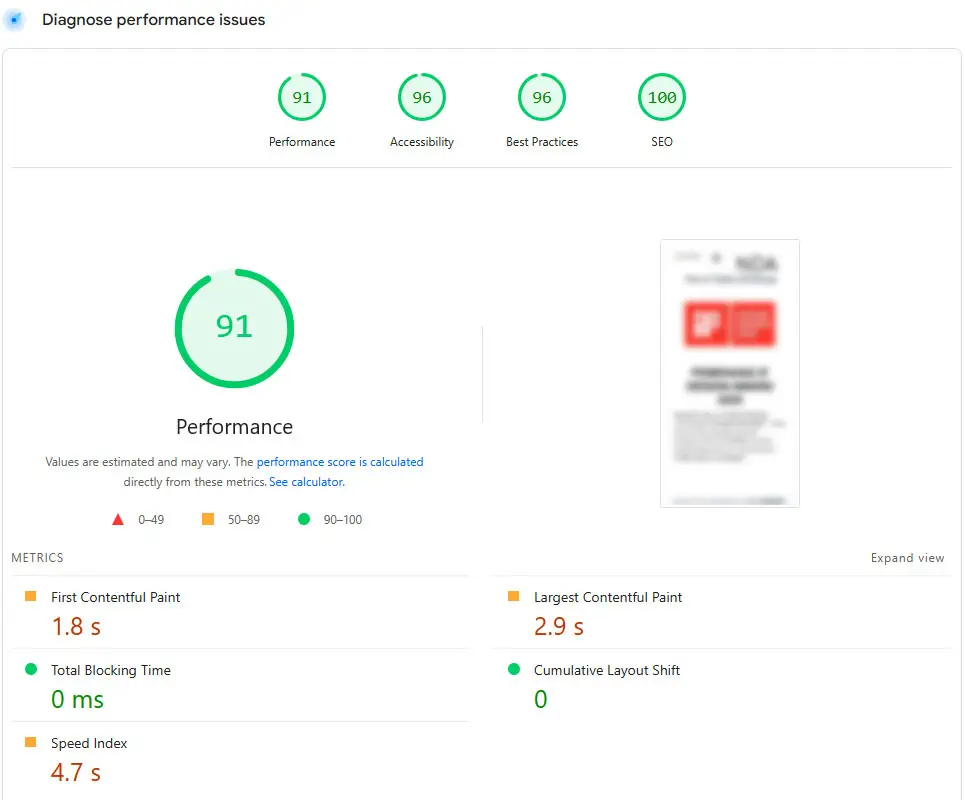
Goal: Under 2.5 seconds.
2026 Focus: Priority Hints and Edge Optimization.
LCP measures when the largest element (usually a hero image or heading) becomes visible. To dominate this metric:
- fetchpriority=”high”: Use this attribute on your LCP image to tell the browser to prioritize it over scripts.
- Zero-TTL Edge Rendering: Use Edge functions (like Cloudflare Workers) to serve HTML from the nearest data center, significantly reducing Time to First Byte (TTFB).
- AVIF as the Standard: Move beyond WebP. AVIF offers 20-30% better compression without quality loss, ensuring faster image delivery.
2. Interaction to Next Paint (INP): The New Gold Standard
Goal: Under 200 milliseconds.
2026 Focus: Minimizing Main Thread Blocking.
Replacing the old FID metric, INP measures the latency of all interactions a user makes with your page. To optimize:
- Yield to Main Thread: Break up long-running JavaScript tasks using
scheduler.yield(). This allows the browser to pause heavy processing to handle a user click. - Remove “Hydration” Bottlenecks: If using React or Next.js, move toward Server Components or Resumability (like Qwik) to eliminate the “heavy JS” tax during page load.
- Optimize Event Listeners: Use passive event listeners for scrolls and touches to ensure the UI remains fluid and responsive.
3. Cumulative Layout Shift (CLS): Visual Stability
Goal: Score less than 0.1.
2026 Focus: Aspect-Ratio and Modern CSS.
CLS measures unexpected movement of page content. Nothing kills a conversion faster than a user clicking the wrong button because the page jumped.
- Strict Aspect Ratios: Always use the CSS
aspect-ratioproperty or explicit width/height attributes to reserve space for images and ads before they load. - Back-Forward Cache (bfcache): Ensure your site is bfcache-eligible. This allows instant loading when users hit the “back” button, resulting in a zero CLS experience.
- content-visibility: auto: Use this CSS property to skip the rendering of off-screen elements, reducing the initial calculation load.
4. The 2026 SEO Performance Checklist
To secure the #1 position, your technical execution must be flawless. Use this checklist:
| Metric | Priority Action | Tooling |
| LCP | Implement Speculation Rules API for instant pre-rendering. | PageSpeed Insights |
| INP | Identify long tasks (>50ms) in Chrome DevTools. | Web Vitals Extension |
| CLS | Use font-display: optional to prevent layout shifts from web fonts. | Search Console |
| TTFB | Move from traditional hosting to a Global Edge Network. | Gtmetrix |
5. Beyond the Basics: Predictiveness
In 2026, the fastest sites don’t just react—they predict. Implementing the Speculation Rules API allows your site to start pre-rendering the next page a user is likely to click based on their mouse hover. This results in a “Zero Millisecond” perceived load time.
“Expert Tip: Stop focusing solely on Lab Data. Google ranks you based on Field Data (actual user experiences from the Chrome User Experience Report). Always validate your fixes in the Google Search Console ‘Core Web Vitals’ report.”

